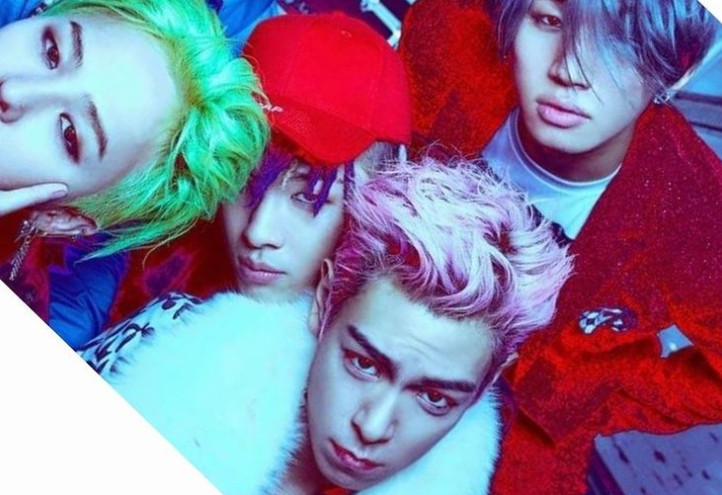
The Return of T.O.P: The Meaning of a Reunion Beyond Nostalgia
In the history of K-pop, the name BIGBANG carries immense symbolic weight. Within that name, the possibility of T.O.P rejoining the group goes far beyond a simple lineup change. It represents a generational longing—a cultural moment that completes a chapter of K-pop itself.
This is not a predictable “comeback story.”
It is a story about time, distance, identity, and ultimately, reconciliation.
1. The Restoration of a Missing Piece
BIGBANG was never just a group. It was a balance of distinct identities—G-Dragon’s artistic vision, Taeyang’s soulful depth, Daesung’s solid vocals, and T.O.P’s unmistakable low tone and commanding presence, all combining into a kind of “perfect chaos.”
During T.O.P’s absence, BIGBANG did not disappear, but something intangible undeniably shifted. His cinematic rap style is irreplaceable, and his persona—cold yet intensely passionate—was a defining dimension that set BIGBANG apart from other groups.
That is why his return would not simply be a “rejoining,”
but a true sense of restoration—of becoming whole again.
2. Beyond Controversy: The Value of Growth
T.O.P’s journey has not been easy. Past controversies and a long hiatus fragmented public perception of him. Yet time has a way of reshaping narratives.
A return does not erase the past—nor should it. Instead, it invites more mature questions:
How does an artist evolve beyond their mistakes?
Can the public embrace that evolution?
BIGBANG has always grown within tension—between fame and vulnerability, excess and reflection. T.O.P’s return would revive that tension in its most human and profound form.
3. Not Just a Reunion, but a Reinterpretation
If BIGBANG were to stand on stage again with T.O.P, it would not be a return to 2012 or 2016.
They are no longer provocateurs riding the rising wave of K-pop.
They are the architects who helped build that wave.
“BIGBANG 2026” would not be a legacy act driven by nostalgia, but a living narrative. Their music would carry not only sound, but layers of history, absence, and return—ultimately offering a new interpretation of what K-pop can be.

4. A Risk That Holds Meaning
Of course, this path comes with risks. Public opinion is unpredictable, and expectations are extraordinarily high.
But BIGBANG has never chosen the safe route.
They have defined K-pop by breaking boundaries—musically, visually, and culturally.
T.O.P’s return would follow that same philosophy:
uncertain, controversial, yet undeniably powerful.
Conclusion: A Story Still Being Written
If T.O.P rejoins BIGBANG, it will not simply complete a group.
It will close one chapter of an era and begin another.
For fans, it will be long-awaited comfort.
For critics, a profound question.
For the industry, a seismic impact.
Sometimes, the most powerful reunions are not about returning to the past,
but about acknowledging the wounds, accepting the distance,
and finding the courage to move forward together.
That is the version of BIGBANG we are waiting for—their most honest one yet.
More to Read : BIGBANG and the Night Time Stood Still