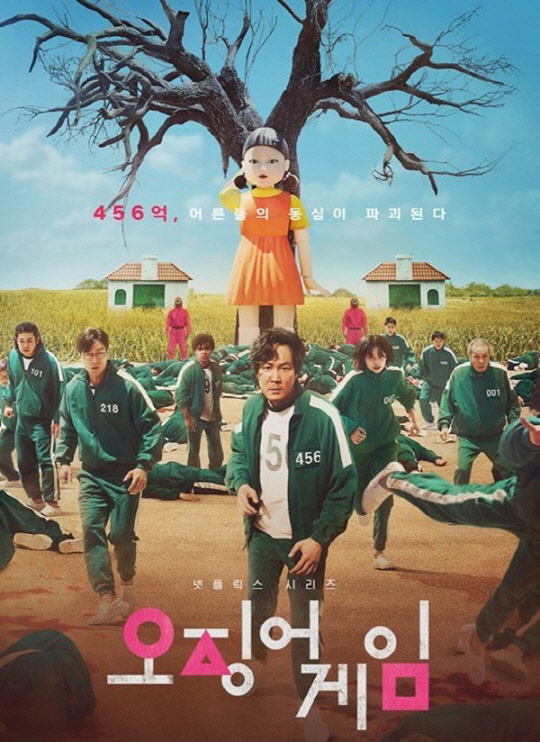
squidgame1
What Comes Next for K-Content :The Shadow Left by Squid Game
In 2026, Netflix’s K-Content stands at a clear crossroads.
Just a few years ago, the world was captivated by Squid Game—its green tracksuits, its brutal twist on childhood games, and its striking originality. But after the release of Squid Game 3 in the summer of 2025, which brought the series to a close, the atmosphere has noticeably shifted.
It was still a commercial success.
But it failed to recreate the shock and freshness of the first season.
And now, the question has become far more direct:
What comes next?
K-Content Standard That Became Too High—and the Disappearance of “The One”
Ironically, the biggest reason K-content now seems to be struggling is its own past success.
In the wake of Squid Game, countless new series followed—larger in scale, higher in budget, and more polished in production. But somewhere along the way, something else was lost.
The stories began to feel familiar.
The intensity increased, but the impact faded.
Audiences are no longer impressed by flashy visuals or extreme concepts alone.
What they are looking for now is not something “bigger,”
but something genuinely new.

In 2026, the Strategy of K-Content Has Changed
Netflix hasn’t stepped back—it has simply changed direction.
The lineup for the second and third quarters of 2026 reflects a more calculated approach. The goal is no longer to create “the next Squid Game,” but to target a wide range of tastes with diverse content.
In Q2, more experimental projects take the lead.
A Boy in the Last Row, starring Choi Min-sik, leans into psychological tension rather than shock value. Meanwhile, The Wonder Fools offers a lighter, more playful take on the familiar superhero genre.
By Q3, the focus shifts toward broader appeal.
From the historical melodrama Scandal to the dark fantasy Donggung, and even bold, contemporary romance titles, the lineup expands across genres and tones.
If anything, the issue is not a lack of content—
but an abundance of it.
Can There Be Another Squid Game?
To be honest, it seems unlikely—at least for now.
Squid Game was not just a successful series;
it was a perfect convergence of timing, storytelling, and social commentary.
What we are seeing instead is a more realistic model:
not one massive global phenomenon,
but multiple moderate successes.
There are still highly anticipated titles on the horizon—
Tantara, written by Noh Hee-kyung, and All of Us Are Dead 2.
Yet even these are more likely to become “successful projects” rather than cultural phenomena.
In the end, the key remains unchanged:
not star power, not scale, not sequels—
but storytelling itself.
The Final Condition for Moving Beyond a Trend
K-content has reached a point where being “well-made” is no longer enough.
What it needs now is a deeper question:
Why must this story be told—right now, and in this way?
The second and third quarters of 2026 will be the first real test of that question.
Will these ambitious lineups translate into genuine emotional impact?
Or will they simply become another wave of disposable content?
The answer, as always, lies with the audience.
And their expectations are far higher—and far more unforgiving—than before.
read more : Perfect 4 Korean Dramas That Will Stay With You for Life
1 thought on “What Comes Next for K-Content :The Shadow Left by Squid Game”